Six California Winemakers Take Atlanta by Storm
I couldn't help but smile as I watched Erin Scally's text message ping my phone a few weeks back. After visiting Mending Wall earlier in the year during our Atlanta High Museum Wine Auction cultivation trip (which you can read about here) and enjoying their wines alongside winemaker Thomas Rivers Brown, the opportunity to reconnect with Erin and discover five new producers—new to me, at least—was irresistible.
Her invitation was simple yet compelling: "We're hitting the road and are thrilled to announce we'll be in Atlanta Wednesday, November 13th. We'd love to have you join us for the Napa Independent Producer's Showcase featuring six family-owned, premium boutique producers." Alongside Mending Wall, the lineup included Cornell Vineyards, O'Shaughnessy, MTGA Wines, Tate, and Arietta.
I immediately invited my friend Dain and we secured our tickets for what would prove to be an extraordinary evening at Terminus 330, an event space I'd never had occasion to visit before.
A MODERN VENUE WITH HISTORIC BONES
Arriving at Terminus 330 on Marietta Street, I was immediately struck by the venue's industrial charm. The building, originally constructed in 1912 for Atlanta's Maddox Coffee Company, had been beautifully restored to showcase its original hardwood floors, exposed brick walls, and heavy timber columns. That said, the overall vibe was somehow distinctly modern.
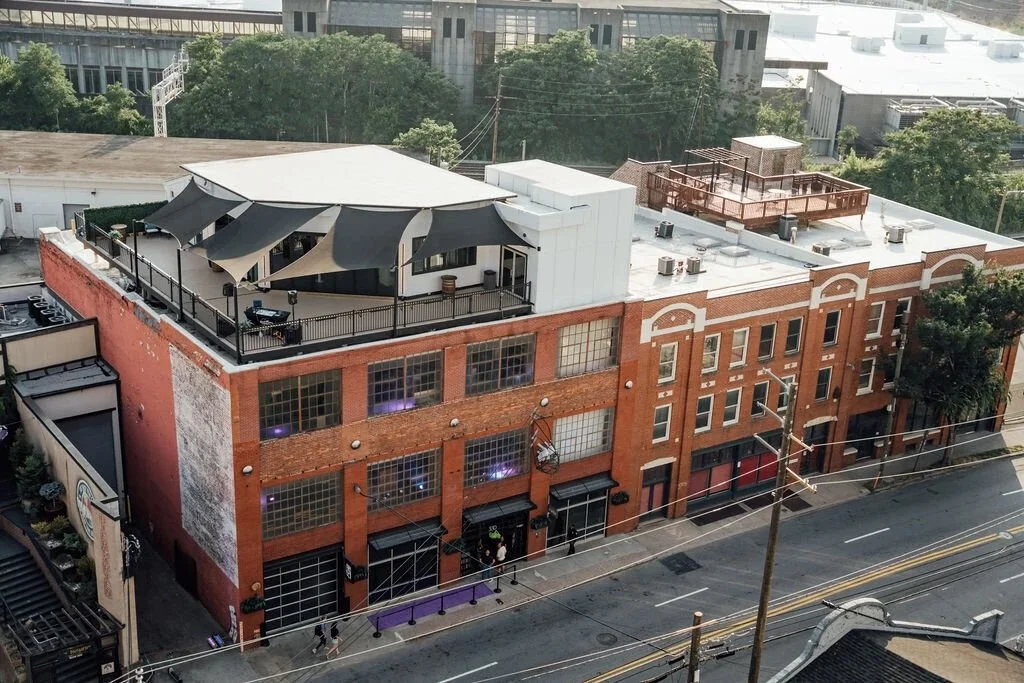
Image from terminus330.com


The space bustled with activity as attendees mingled among impressive displays of wine bottles and beautifully arranged charcuterie boards. The rustic elegance of the room—with its original architectural details—provided a near ideal backdrop for this gathering of California's finest boutique producers.


A TRAVELING “MUTUAL ADMIRATION SOCIETY”
As I learned from the various winery reps onsite throughout the evening, this group of six producers has become something of an unofficial family connected through the world of fine wine. One that enjoys (and finds shared value in) pooling their resources to travel together for the purpose of promoting their own individual releases.
This ongoing relationship began with Mike from MTGA, Luke from Cornell, and Suzanne from Tate, all of whom started traveling together after years of being friends. A couple of years ago, Sarah from Arietta joined that trio, and just last year they brought both Erin from Mending Wall and Kristen from O'Shaughnessy into their fold.
Luke explained their venue selection process thusly: They use a "really small company called Google," he joked, describing how they research different venues. They check rental price points, dimensions and legal capacities until they find the right combination for their needs. They are also careful to ensure the venues they use are not located in neighborhoods or areas that are known to be rough or otherwise off-putting to their potential guests. "This one was not too bad," he noted with satisfaction about Terminus 330.
This group of reps travels together twice each year, careful to visit different cities each time, so as to bring their wines directly to consumers who might not have the opportunity to visit Napa themselves. This particular tour found Atlanta sandwiched in between Charlotte, NC (the night prior) and Tampa, FL (the night after) on a three-day Southeastern run.
THOMAS RIVERS BROWN'S MENDING WALL ARTISTRY
Starting where I left off during my aforementioned visit to Napa in August, I reconnected with Erin Scally at Mending Wall’s station. It was wonderful to revisit their wines without having to open any of the bottles I have in my cellar from that journey!
Known for her deep knowledge of their portfolio and genuine passion for their wines, Erin immediately made Dain and I feel welcome as she guided us through her featured lineup. We began with their signature 2022 Mending Wall Stone on Stone, which I scored 93 points for its delicious and refreshing character.
Mending Wall represents the vision of proprietors Frank Dotzler, Mark Pulido, and Donna Walker, who partnered with legendary winemaker Thomas Rivers Brown to create wines "built around the spirit of wine itself." Brown, famously the youngest winemaker to receive a perfect 100-point score from Robert Parker and the first American winemaker to earn a perfect 100 from Wine Spectator, contributes decades of experience via his earlier work with prestigious producers throughout Napa Valley.
This Sauvignon Blanc blend showcases 80% Sauvignon Blanc and 20% Semillon. The Semillon adds crucial texture and viscosity that makes the wine linger on the palate rather than disappearing (like a typical "porch pounder”). The fruit comes entirely from Northern Valley sources: one block from Mending Wall's estate vineyard and the remainder from the Tofanelli Vineyard in Calistoga.
Erin explained that Thomas makes this particular wine primarily for himself — he's renowned for his Cabernets but personally loves drinking Champagne and white wine at day's end. The result? A more serious white that brings complexity without seeming cloying.
Moving on to their reds, the 2022 Mending Wall Mortar & Stone earned 92 points from me for its dark fruit character and open, balanced profile. It was particularly exciting to taste this vintage, as Erin had allowed me to try the 2021 version back in August at the winery, and I’d scored that vintage identically. This unusual field blend features 70% Zinfandel for aromatics, 20% Petite Sirah for color, and 10% Charbono from the 90-year-old vines at Tofanelli Vineyard. These ancient, dry-farmed, head-trained vines produce incredibly high-quality fruit in small quantities — exactly what small producers like Mending Wall seek.
Their 2022 Mending Wall Cabernet Sauvignon, scoring 92 points, blends fruit from two St. Helena vineyards just half a mile apart: their estate vineyard and Tournahu vineyard. The wine spent 22 months in barrel and showcased remarkable openness for such a young vintage, with integrated tannins and a velvety texture that Erin described as not requiring "a fatty steak" to enjoy.
The highlight was their 2022 Mending Wall Cabernet Sauvignon Godward Vineyard, which earned 93 points — again matching my score for the 2021 vintage I had tasted during my visit to their facility. This fruit originally went into BV's Georges de Latour Private Reserve for 40 years before Constellation ended the contract. Located between Staglin and Scarecrow on the Western Rutherford bench, this vineyard produces fruit from what Erin termed the “Rodeo Drive of vineyards."


As a special treat, Erin poured their 2021 Mending Wall Cabernet Franc Oakville Ranch, rating 91 points. This was an extremely limited one-year-only wine made when a neighboring contract fell through just weeks before harvest. With only 75 cases produced from this high-elevation, fog-line vineyard, it represents a unique opportunity that might never come again. How cool that we got a chance to sample it!
BEING SERIOUS ABOUT WINEMAKING WITHOUT TAKING THINGS TOO SERIOUSLY
Moving on, we made our way to the the Cornell station, where Luke Speer immediately established his fun and irreverent approach by introducing himself with his self-proclaimed title of Cornell’s "Director of Drinking.” This playful attitude set the stage for what would become one of the evening's most entertaining and educational presentations. Both Dain and I absolutely loved it!


Behind Luke's obvious passion stands the vision of Henry Cornell and the expertise of winemakers Elizabeth Tangney and Françoise Peschon, who collectively pursue perfection from their Spring Mountain estate. Cornell Vineyards operates from 245 acres atop Spring Mountain on the Sonoma side. Though they lost 235 acres to the devastating 2020 fires, that tragedy held an unexpected upside: It ultimately allowed them to replant more thoughtfully, optimizing their vineyard blocks for better quality. The estate now features 20 acres of vines broken into 32 smaller sub-blocks, each with their own distinctly different varietals, row orientations, rootstocks, and vine stocks.
Their 2023 Cornell Chardonnay, scoring 92 points, told a fascinating story of pursuing perfection. When Henry Cornell first asked winemakers Elizabeth Tangney and Françoise Peschon to "make me Raveneau"—referencing one of Burgundy's greatest producers—they couldn't find suitable fruit in Sonoma. Instead, they ventured to Santa Barbara's Our Lady of Guadalupe vineyard, owned by Dave Phinney of Prisoner fame, finding diatomaceous earth soils that produced the mixture of super-high acidity and low alcohol character they sought.
Luke shared with us some entertaining anecdotes about Henry Cornell's dedication to drinking exceptional Burgundy. As he explained with a smile, "Henry comes to town and we drink Raveneau every day.
“My job sucks!" he joked, describing how they'd recently enjoyed a 2006 Raveneau before wine critic Antonio Galloni visited and brought a 2014. "We're like, ‘Really, Antonio? You can't bring anything older?’" Luke quipped, highlighting the rarified world of exceptional white Burgundy these wines aspire to match.
The 2021 Cornell Vineyards Cabernet Sauvignon Courtship, earning 92 points, represented a different side to their portfolio. When their team realized the "leftovers" from their flagship wine were exceptional, they used those cast-offs from their estate's 32 sub-blocks to create this hedonistic blend of 51% Cabernet Sauvignon, 33% Merlot, 10% Malbec, and 6% Petit Verdot. To my palate, it offered immediate accessibility.
Their flagship 2021 Cornell Estate Cabernet Sauvignon commanded 93 points for its overly tannic yet balanced structure. As Luke explained, Henry Cornell originally wanted to make just one perfect wine, like a first-growth Bordeaux, before Cornell came to the realization that even first-growths produce second labels.
The evening's most exclusive pour was their 2021 Cornell Vineyards Cabernet Sauvignon Commitment, which earned 93 points. This $325 wine, made from four of their best barrels and aged an additional year, carried profound meaning. After losing 235 of their 245 acres to the 2020 fires, the team found themselves at a crucial juncture in the company’s life. They could either continue onward or simply quit and fold up shop. The name "Commitment" reflects their decision to persevere — both professionally and personally, for Henry Cornell's family.
Luke's storytelling reached its peak when he discussed those fires and the subsequent recovery from the destruction they caused. He quoted his grandmother, when he said, "My grandma Helen, who's one of my all-time favorite people in the world, always said that when God gives you lemons, ask for tequila." This philosophy clearly influences Luke's approach to both winemaking and life.
Throughout the tasting, Luke maintained his irreverent spirit, at one point declaring, "Let's take the pretentiousness out of this shit. We're here for a good time!" This attitude perfectly encapsulated why we enjoyed the Cornell experience so much — they offer exceptional wines made with zero pretense, and present them to the public with genuine enthusiasm.
O'SHAUGHNESSY: FROM UNTOUCHED MOUNTAIN FOREST TO HIGH-LEVEL WINERY
Kristen Arnold's presentation at O'Shaughnessy shone a spotlight on the remarkable dedication of Betty O'Shaughnessy, who transformed a Minnesota winter escape into a serious winemaking venture. Betty purchased her second home in 1990 in Oakville, eventually becoming friends with the Groths and developing a passion for winemaking. In 1996, she found an untouched forest property on Howell Mountain, and this led to plantings in 1997 and the completion of their winery facility in 2004.
Sean Capiaux serves as both winemaker and president, providing continuity since the brand's inception — something that’s an increasingly rare achievement in today's unusually fluid (pun intended) wine industry. The estate spans 120 acres. 42 of those acres are planted to vines — primarily the 36 acres dedicated to the Cabernet Sauvignon that form the backbone of their production.


Their 2022 O'Shaughnessy Chardonnay, which I scored at 91 points, showcased bright acidity and body without malolactic fermentation, employed a combination of neutral oak, new oak, stainless steel, and concrete. With only 200 cases produced, this wine demonstrates their commitment to quality over quantity.
The 2021 O'Shaughnessy Cabernet Sauvignon Howell Mountain, scored at 92 points, stands as their signature wine. This Bordeaux blend features 83% Cabernet Sauvignon blended with estate-grown Cabernet Franc, Merlot, Malbec, Petit Verdot, and Carménère from vines planted starting back in 1997. At 1,800 feet elevation, above the fog line, the vineyard enjoys full sun exposure that produces concentrated fruit.
During our conversation, Kristen shared a philosophy that perfectly captured the spirit of the evening: "You can't have a good bottle of wine and poor company. Right?" This sentiment resonated deeply with me, as it encapsulates what wine culture is truly about — the personal connections that are made through and over a shared appreciation for exceptional wines.
Their 2018 O'Shaughnessy Cabernet Sauvignon Del Oso Vineyard Block 13 Howell Mountain earned my highest score of their lineup (94 points). This first release of 100% Cabernet from their oldest, lowest-yielding block showcased Bordeaux characteristics along with beautifully resolved tannins. Only 80 cases of this wine were produced, and as such, it wonderfully represents the pinnacle of their estate fruit.
The 2021 O'Shaughnessy Cabernet Sauvignon Mt. Veeder, at 93 points, succinctly demonstrated how their two distinct mountain sites produce quite different expressions. At a sightly lower 1,300 feet, this vineyard (which spends most days covered by fog or shade with sun only appearing in the afternoons) produces a longer-ripening yield with characteristics of blue fruits such as boysenberry and blackberry.
MTGA WINES: FOUR HANDS AND VINTAGE VIDEO GAMES
Meeting Mike Anderson at the MTGA station was particularly exciting for me since Merlot is my favorite varietal. His story began in 2010 when Merlot was decidedly unfashionable, but Mike had grown up in St. Helena and his family had been involved in the wine industry since 1983 (at Anderson's Conn Valley Vineyards). Despite extensive cellar and vineyard work doing what he described as "free child labor" on the family farm, Mike had never made wine unsupervised from start to finish.
His journey through the wine industry included working at Silverado Vineyards, Baldacci, Raymond Vineyards, and Cliff Family Wines. He also gained invaluable experience through part-time and on-call positions whenever other wineries needed an extra hand. This extensive background in various cellars provided him with enough of a knowledge base to eventually feel qualified in striking out on his own.
Designed and functioning as an almost impossibly streamlined two-person operation (it’s just Mike with his wife by his side), MTGA has grown to now releasing 1,200 cases while still maintaining their focus on Merlot as the flagship. Mike sources their fruit from the Castellucci family, with whom he's worked for all 15 years of production, creating wines at the family's Anderson's Conn Valley facility.
His 2017 MTGA Merlot, which I scored 94 points, showcased why he started this label when Merlot wasn't fashionable. The wine displayed beautiful red fruit, forward character, and a delicious nose that had developed perfectly after seven years. Mike keeps a library program specifically because he believes his style shines in the 5-7 year range. That’s when his wines settle down and develop greater levels of complexity beyond those associated with their initial fruit. I was so impressed with this particular wine that I immediately purchased some for my own cellar.
His 2021 MTGA Repechage, rated at 92 points, represented a red blend named after the "second chance" race in rowing regattas. This balanced, easy-drinking wine clearly embodied Mike's approach to accessible winemaking.


The 2022 MTGA Cabernet Franc Let It Run, rated 91 points, was made from just one ton of fruit (which produced less than 300 bottles). It won't be officially released until February of 2025. This wine displayed Mike's playful side, as its label was clearly inspired by the early 1980s electronic arcade game Galaga. Mike creates video game-inspired labels for each of his limited Cabernet Franc bottlings, having previously featured graphics reminiscent of both the Super Mario and Pac-Man games. When I mentioned I had once owned a vintage Galaga cocktail-style arcade game for a decade, Mike's eyes lit up, and we shared a nostalgic connection to classic-era arcade gaming!


My own Galaga cocktail table (before I parted ways with it in 2018)!
Though they had run out before I reached his station, Mike's passion for their 2021 MTGA Merlot Single Barrel was evident. His enthusiasm convinced me I needed to experience this wine, so I added it to my order despite not having the ability to taste it first. If there’s one thing I’ve learned in my years of journeys and experiences with serious, high-level winemakers, it’s this: Sometimes their own genuine excitement is recommendation enough for me. Mike clearly felt that this special wine represented the epitome of what he strives for in his Merlot program. So how could I not trust his finely-tuned judgment?
TATE: CANADA + CALIFORNIA = MY RWOTN
Suzanne Tate's station was a testament to the story of her husband David, whom to the best of my knowledge is the only Canadian-born, Canadian-trained winemaker currently working in Napa Valley. David's journey began in the unforgettably named Uranium City (on Vancouver Island near the Arctic Circle). He studied on the Niagara bench at Brock University’s Cool Climatology Institute, where German and Austrian professors shaped his approach to winemaking.


David's educational background particularly fascinated me, as Suzanne explained how his thesis work focused on "how certain yeast strains cleave to create these aromatics in the glass." Once I knew what to look for, his scientific approach to aromatics development was plainly evident in every wine they produce — especially their Sauvignon Blanc.
That’s yet another example of how learning about the history of winemaking helps explain some of the mystery of winemaking! And enhances one’s appreciation and enjoyment of the final product.
Before founding Tate in 2011, David spent five years as assistant winemaker at Ridge's legendary Montebello property. He currently serves as General Manager and winemaker at Barnett Vineyards on Spring Mountain. Tate operates as a 1,000-case, two-person operation. Suzanne handles sales while David focuses on making the wines. Together they partner with small farmers who each have one or two-acre plots. This is the key to how they create their unique, single-expression wines.
Their 2023 Tate Sauvignon Blanc, which earned 92 points, demonstrated David's thesis work in action through an incredibly long 4.5-week fermentation period. Sourced from a single acre south of St. Helena, this wine undergoes four months in stainless steel before being bottled (with Stelvin closures to preserve its freshness). As Suzanne explained, David's research showed that short fermentations tend to blunt the nose, while extended fermentations allow for proper aromatic development.

Their 2023 Tate Chardonnay Spring Street, rated at 91 points, further showcased David's deep commitment to barrel fermentation and detailed winemaking. Using only one new French oak barrel (among seven total), with partial malolactic fermentation and weekly battonage, the wine achieved texture and complexity without relying solely on the oak. Suzanne described this fairly intricate process, and explained how they manage seven individual fermentations rather than just one large batch, which she said created a more nuanced layering in the final wine.
The 2022 Tate Cabernet Sauvignon from Jack's Vineyard on Howell Mountain scored 93 points and demonstrated their expertise at handling mountain fruit. But perhaps the evening's biggest surprise was their 2022 Tate Cabernet Sauvignon Mt. Veeder. That one earned 94 points from me and became my red wine of the night. With jammy red fruit, balanced tannins, and candy-like notes, this bottle impressed me so much I immediately added some to my cellar — and it stood as a particularly remarkable selection, given its exceptional quality-to-price ratio.


ARIETTA: MUSIC AND METEORS?
As the night was winding down, we arrived at Sara Nicole Hitchcock's Arietta station, and I was immediately drawn to learn about this winery's musical connections. As a drummer who loves heavy music (something that actually inspired my blog’s name "Heavy Pour Wine") I was fascinated by Arietta's creation story centered around two friends who shared passions for both wine and music.
Founded in the mid-1990s by Fritz Hatton and his partner Karen Hatton, Arietta began with a single barrel of Cabernet Franc blend from Carneros’ Hudson Ranch vineyard in 1996. The winery name reflected their musical passion, and they've maintained this artistic vision for nearly three decades. Legendary winemaker John Kongsgaard crafted their wines for the first decade before eventually handing the reins over in 2005 to his protégé Andy Erickson.

Unfortunately, since the tasting was in the process of closing just as we reached this final station, I didn't have the opportunity to explore the musical side of their venture as much as I would have liked. However, Sara's knowledge of their wines was apparent as she quickly guided us through their exceptional offerings.
The 2019 Arietta Red Wine H Block Hudson Vineyards, which I rated at 92 points, represents their flagship wine. Because their Cabernet Franc and Merlot are co-harvested and co-fermented in a single block precise vineyard knowledge is required in order for both to achieve perfect ripeness. This wine carried special significance as it stands as their 25th anniversary bottling.

Their 2021 Arietta Cabernet Sauvignon, which I scored at 92 points, came from Meteor Vineyard in Coombsville — one of winemaker Andy Erickson's favorite Cabernet sources. Sara hilariously described Mike Wolf as the "bomb-ass viticulturalist" who planted that vineyard 20-25 years ago and still farms it today. I loved her enthusiastic description of Mike Wolf — it perfectly captured the respect these producers have for the very special and talented people who grow their superlative grapes.
The vineyard's name, Meteor, derives from its appearance. The site literally looks what one would imagine had a large meteor crashed there at some indeterminate point in the past. The unique geological formation at that site is what makes the location so special and ideal for growing Cabernet. This vineyard sits on partially volcanic soils and is dry-farmed — a combination that produces the concentrated fruit Andy Erickson seeks for his wines.
As the evening was drawing to a close, we were thrilled to unexpectedly receive an incredible gesture of hospitality, as Sara gifted us an unopened bottle of their Arietta Variation One — a Syrah blend that represents an anomaly in Arietta's typically Bordeaux-focused portfolio. This pet project of John Kongsgaard is made in just four barrels annually, and represents the compromise between Arietta's two partners. I immediately added this exceptional gift to my cellar, grateful for such generosity from a highly respected producer I'd only just met!

THREE STANDOUT DISCOVERIES & A RAINY NIGHT IN GEORGIA
Reflecting on this extraordinary tasting, three wines in particular stood out to me. The 2017 MTGA Merlot showcased exactly why Mike Anderson's dedication to this often-overlooked varietal produces such compelling results: Its perfect development after seven years demonstrated the wisdom of his library program.
The 2018 O'Shaughnessy Cabernet Sauvignon Del Oso Vineyard Block 13 demonstrated the exceptional potential of Howell Mountain's oldest, lowest-yielding vines with its beautifully resolved tannins and Bordeaux-like character.
Most impressive, however, was the 2022 Tate Cabernet Sauvignon Mt. Veeder, which surprised everyone with its accessibility, balance, and remarkable quality at such an attractive price point — proving that availing oneself of exceptional wine doesn't always require submitting oneself to premium pricing structures.
The evening's success reflected not just the outstanding quality of these wines accross-the-board, but the genuine openness of each representative to share detailed information about their companies’ winemaking philosophies and vineyard sources. From special pours that did not appear on the official list to in-depth discussions about terroir and techniques, each conversation I engaged in that night deepened my appreciation for these small producers' dedication to their craft. I particularly appreciated when they took the time to explain some of the more technical aspects of their processes. As someone who writes about wine for educational purposes, these detailed explanations helped me to better understand and then in turn to share the intricacies of winemaking with my growing number of readers — like yourself!
The sincere camaraderie and respect that exists among this group of producers was clearly evident throughout the evening. They truly function as a wine family, supporting each other's efforts to bring exceptional wines to markets far from their home bases in Napa Valley. Their collective willingness to share both their wines and their stories created an atmosphere of education and discovery that made this showcase memorable beyond just the tastes found in their exceptional bottles.

Left to Right: Mike, Erin, Luke and Brad
As the evening wound down, I attempted to walk home through downtown Atlanta, as the beautiful November night seemed ideal for a bit of quiet reflection. Unfortunately, the weather had other plans, and I was forced to cut my walk short when rain began to fall. But that brief inconvenience couldn't diminish what had proven to be a memorable introduction to six remarkable California producers — each of whom had thankfully brought their passion and expertise directly to Atlanta's wine lovers.